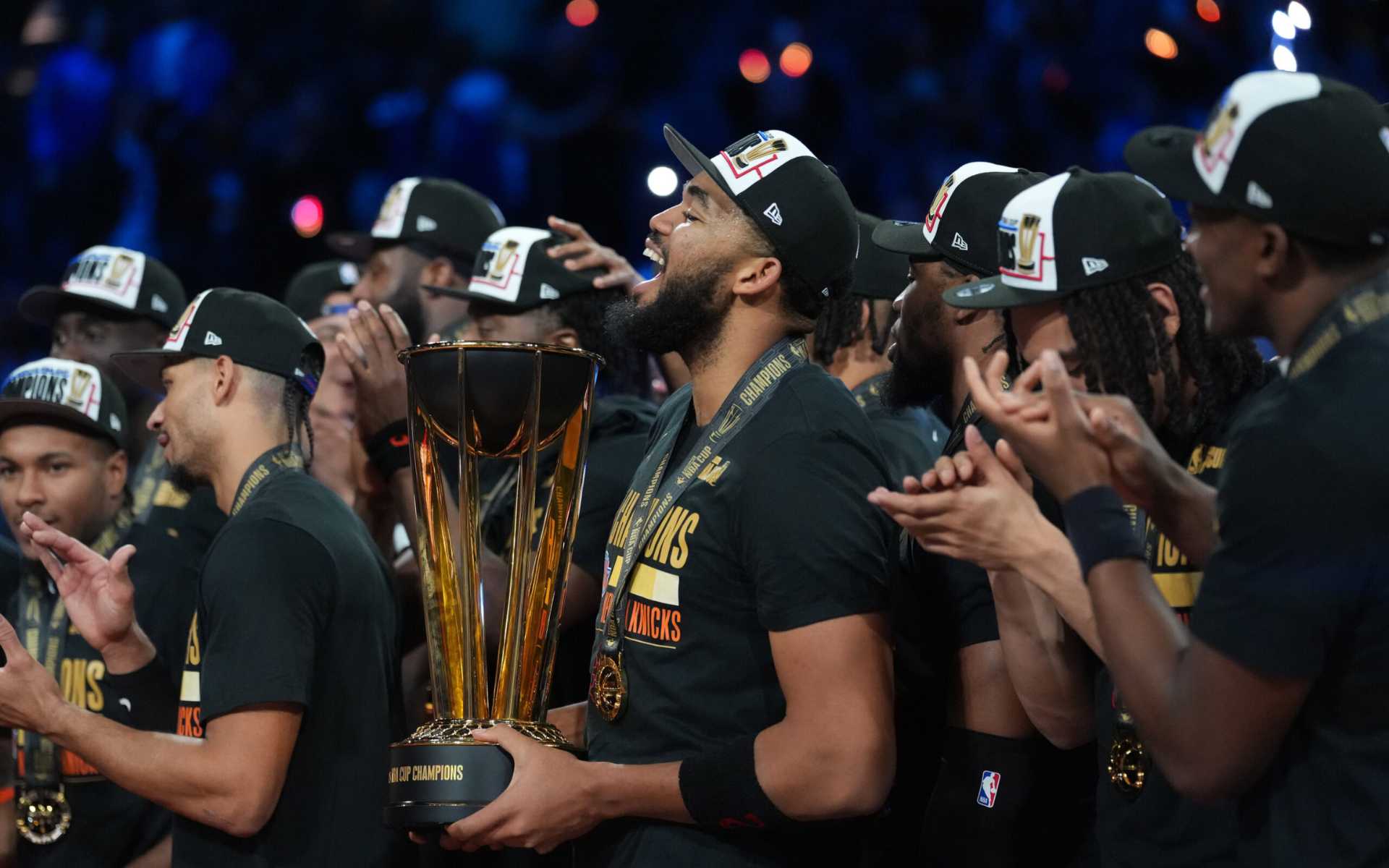
Confetti cascades through a Las Vegas arena as a team clad in black erupts in celebration following the third Emirates NBA Cup. Karl-Anthony Towns lifts the trophy, Jalen Brunson grips the MVP moments later, the image locking in New York’s win over San Antonio in the Cup Final. A 124–113 victory, which delivered the Knicks their first trophy in over half a century.
Yet, the aftermath proved almost as headline-grabbing as the celebration itself. In a somewhat controversial decision, New York opted not to hang a banner commemorating the triumph, a move reported shortly after by ESPN’s Shams Charania and SNY’s Ian Begley. Begley added that the organisation has “bigger goals in mind.”
The decision raised eyebrows. Banners traditionally mark achievement at every level, from division titles to the sport’s highest honours. Including NBA Championships, retired numbers, and, in New York’s case, even Billy Joel and Harry Styles performances.
The Knicks’ stance has only fuelled an ongoing debate around the importance of the tournament itself, with fans and league legends alike questioning its legitimacy. “I think the Cup thing is somewhat embarrassing,” said Hall of Famer Charles Barkley. “I’m disappointed that we have to make an in-season tournament to make these guys more money so they won’t do load management.”
Across the Atlantic, the contrast is stark. European football leagues operate with multiple domestic trophies that carry genuine prestige. England’s FA Cup runs from August to May, spanning 14 rounds, and its latest iteration delivered one of the competition’s great shocks as Crystal Palace defeated Manchester City to claim their first-ever FA Cup triumph. The Spanish Copa del Rey follows a similar structure, stretching from September to April, as do domestic cups across the continent.
While Europe’s heavyweights, PSG, Barcelona, Real Madrid, and Manchester City often prevail, the magic lies in the exceptions. From non-league Hereford United’s famous upset of Newcastle in 1972 to modern-day giant killings, these competitions matter. They form a crucial part of the Treble, offer pathways to continental glory, and, perhaps most importantly, provide opportunities for academy products and young players to announce themselves on a major stage.
This is where the NBA could learn. As the league edges toward a future without LeBron James, Stephen Curry and Kevin Durant, it faces a looming identity shift. The NBA Cup could serve as a proving ground for the next generation, allowing young players to shine while affording ageing stars strategic rest, addressing two of the league’s most pressing challenges at once.
The 2025 Final offered a glimpse of that potential. Marquette breakout 24-year-old Tyler Kolek delivered a 14-point, 5-assist performance, doing the dirty work that powered New York’s win. Alongside him, London’s own OG Anunoby stole the spotlight, pouring in a game-high 28 points. While Anunoby is no rising star, the Cup presents a platform to reinforce value and extend careers, much like a standout cup run can earn a footballer a new contract or a move elsewhere.
Still, structural issues persist. Outside of the Final, Cup games count toward the regular season, blunting tension and diluting stakes. In a league already grappling with inconsistent star participation, the tournament does little to solve its own credibility problem. Despite early promise, the competition remains too brief and too easy to dismiss.
The Cup’s first two editions suggested a different future. Both the Los Angeles Lakers and Milwaukee Bucks celebrated their victories with banners, a clear signal that the tournament carried weight. This year, that message fractured.
If one of basketball’s most storied franchises, fresh off its first silverware in decades, deems the achievement unworthy of permanent recognition, the problem extends beyond Madison Square Garden. Until the NBA clearly defines what the Cup is meant to represent, its value will remain unresolved. Because if the Knicks don’t believe in it, why should anyone else?